Office Clearance in Highgate

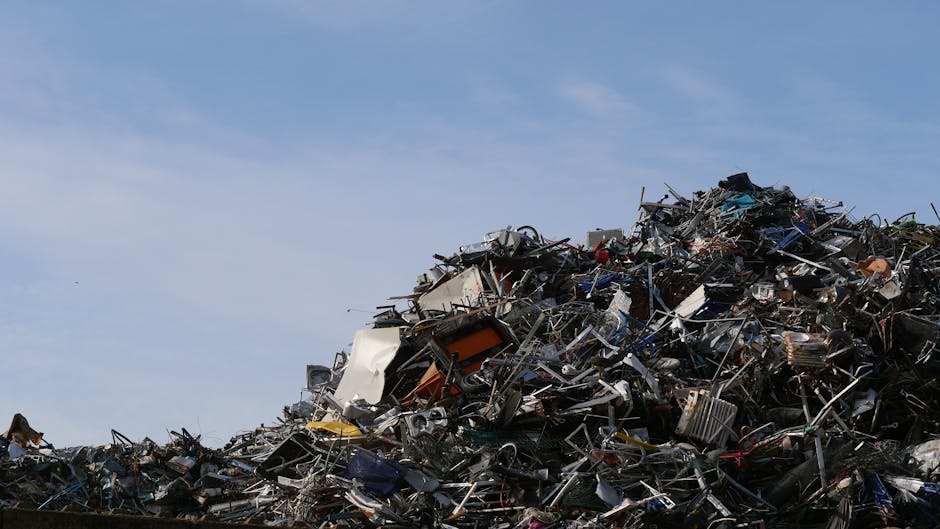
Office clearance in Highgate should be organised, careful and suited to the way your workplace actually operates. We provide a practical clearance service for offices that need desks, chairs, filing, fittings, archive material or general business waste removed in a controlled way. Whether you are reducing your footprint, reconfiguring rooms or emptying premises at the end of a lease, the aim is to clear space without turning the process into a disruption. Our approach is built around separating reusable items, recyclable materials and anything that needs responsible disposal.
The service can be arranged for a single room, a floor of shared workstations or a full business premises. We handle a wide range of office contents, from everyday furniture to bulkier items that require planning before they are taken away. Clearance is not just about loading items quickly; it also involves access, segregation and sensible handling so that items leave the building in the right way. If you need to discuss what is included, you can request a quotation once you have an idea of the items involved.
Our office clearance work is designed for businesses that want a straightforward route from crowded rooms to a usable, tidy space again. That may involve removing old desks before replacement, taking away surplus storage, or clearing accumulated items after a change in working pattern. Some jobs are dominated by furniture, while others are mainly paper, mixed office clutter or redundant equipment. Different contents need different handling, so a proper plan helps keep the work efficient and proportionate.
Clearance for desks, seating and workplace furniture

Desks, task chairs, meeting tables, cabinets and shelving are common parts of an office clearance. These pieces vary in size and condition, and some may be suitable for reuse or refurbishment rather than immediate disposal. We assess the mix of furniture carefully so that usable pieces are separated from damaged or obsolete items. Where possible, this supports a cleaner process and reduces unnecessary waste, while still making sure the site is cleared to the standard the space needs.
Furniture removal often depends on access and on how the items are fixed or assembled. Flat-packed units, modular storage and heavy cupboards can all require different handling methods, especially in buildings with narrow corridors, lifts or shared entrances. Planning for the route out of the premises helps avoid delays and prevents damage to walls, flooring and door frames. If you are comparing options, it can help to identify the furniture that must go first and the pieces that might be retained or moved elsewhere within the business.
Working around changing office layouts
An office clearance is often part of a wider change rather than a one-off tidy-up. Workstations may be being reduced, rooms repurposed or storage areas consolidated. In those cases, it helps to think about the order in which items leave the building. Clearing old seating before new furniture arrives, for example, can free circulation space and make the rest of the move easier. Where business continuity matters, clearance can be staged so that only the relevant areas are handled at one time.
Handling paperwork, archive material and office clutter
Offices often contain far more than furniture. Paper archives, boxed files, stationery stock, promotional material, folders and mixed clutter can take up significant space. Clearance work in this category needs a measured approach because not every item should be treated the same way. Sensitive papers may require separation before removal, while general office clutter can usually be grouped by material type. The purpose is to create an orderly process that helps the client identify what is being removed and what should stay.
Document-heavy clearances can also involve storage rooms, cupboards and forgotten back offices where items have accumulated over time. These spaces are sometimes more time-consuming than the main work area because the contents are varied and less organised. A sensible clearance plan focuses on making categories clear rather than mixing everything together. For businesses that need a tidy handover, this can be the difference between a quick removal and a drawn-out job that keeps interrupting day-to-day activity. If the remaining contents are uncertain, a brief inventory can be helpful before the work begins.
Business owners and managers often want the clearance to be tidy, discreet and practical. That means collecting loose material, removing redundant supplies and making the space ready for cleaning, inspection or further fit-out work. In many cases, a good result depends on deciding what is no longer needed before the clearance starts. Once that is clear, the work becomes more efficient and the final space is easier to hand over or reuse.
Business waste, equipment and responsible disposal
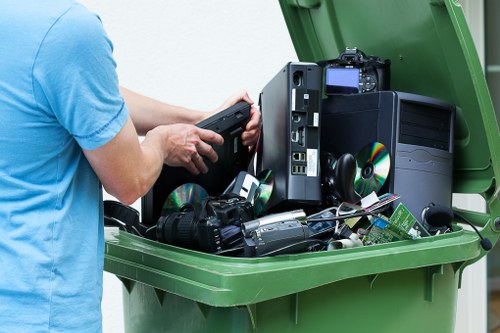
Office clearance can include more than furniture and paper. Computers, monitors, printers, small appliances, cables and general business waste may also need to be removed. These items are usually handled separately from ordinary rubbish because they can contain recoverable materials or components that need appropriate disposal. A sensible clearance service aims to keep these categories distinct, which helps with recycling and makes the overall process more orderly for the client.
Some equipment may be outdated but still physically intact, while other items may be broken, incomplete or no longer suitable for reuse. We handle this by sorting the contents into practical groups before removal. That can make it easier to send material towards recycling channels where appropriate and to avoid placing everything into one mixed load. When offices are clearing out old IT areas, storage cupboards or meeting rooms, good sorting saves time later and supports better disposal choices.
Business waste removal is often most useful when a site has mixed contents and no single category dominates. In those circumstances, it is helpful to understand the likely volume of each type of material so the work can be planned accurately. If you are preparing a quotation request, noting whether the job is mostly furniture, mostly paperwork or a combination of several items will help describe the scope clearly. That makes it easier to match the service to the actual clearance needed.
Planning access, timing and site preparation

Before an office clearance takes place, practical planning matters. Access routes, loading points, stairwells, lifts and opening hours can all affect how the work is carried out. Many offices also have shared areas or building management rules that need to be respected during removal. The clearer the information about access, the easier it is to arrange the work in a way that fits the site. This is especially useful in occupied buildings where noise, movement and shared traffic need to be kept under control.
Two simple steps usually help a quotation become more accurate: first, group the items by type if you can; second, note anything awkward, heavy or fixed in place. That does not need to be a long list, but it does help separate ordinary load items from pieces that may require extra handling. If you are uncertain about what to include, a brief description of the rooms involved is often enough to start the conversation. Good preparation is about clarity, not perfection.
- List the main rooms or storage areas that need clearing.
- Separate furniture, paperwork and equipment where possible.
- Note any restricted access, stairs or loading limitations.
- Identify any items that are fixed, heavy or unusually bulky.
Reducing waste through reuse and recycling

Responsible office clearance should consider where items go after they leave the building. Some furniture may be suitable for reuse, some materials may be recyclable and some items may need disposal as waste. The best route depends on the condition and type of the contents. Separating items during the clearance process helps keep options open and reduces the chance that everything is treated the same way. This is useful for businesses that want a more structured and conscientious approach to clearing premises.
Materials commonly encountered in an office setting include wood, metal, plastics, paper, textiles and electrical components. Each has different handling needs, so the clearance process works best when items are sorted in a thoughtful order. We aim to keep reusable and recyclable material apart where practical, while still moving the job forward efficiently. If sustainability is a priority for your business, that can be included in the way the job is planned and explained from the start.
When discussing a quotation, it helps to mention whether the space contains standard office furniture, office equipment, archive material or mixed waste. That context gives the quotation more accuracy and reduces the chance of surprises once the clearance begins. If you are ready to go ahead, request a quotation and outline the items you want removed so the job can be scoped properly.
About Highgate
Highgate is a well-known area in north London, set on high ground that has long shaped its character and views across the city. The settlement grew around Highgate Hill and the historic route through the village, and its older core still shows the influence of that past in the narrow streets, varied building styles and surviving period fronts. Highgate’s identity has been shaped by a mix of residential development, long-standing local institutions and the green edges nearby, particularly the access to Hampstead Heath and the surrounding slopes. The area’s built environment includes Georgian and Victorian terraces, later mansion blocks and the distinctive presence of Highgate School, whose history is part of the wider local story. Highgate Cemetery is one of the area’s best-known landmarks and has become notable for its architecture, landscape and memorials as much as for its famous burials. The neighbourhood also includes the village centre, with shops, pubs and local services clustered around the main roads and smaller side streets. Nearby woodland and open spaces contribute to the area’s sense of separation from the busiest parts of inner London, while still keeping it closely connected to the rest of the city. Highgate tube station, on the Northern line, links the area to central London, and the historic street pattern reflects older routes rather than a rigid grid. That combination of elevated setting, architectural variety and access to open land gives Highgate a distinctive place within the wider borough landscape.
Clearance for premises changes and end-of-tenancy work
Office clearance is often required when a lease ends, a business moves, or premises are handed back in a different condition from when they were occupied. These jobs usually need an orderly approach because the aim is not only to remove contents but also to leave the space ready for whatever happens next. That may involve removing all remaining furniture, clearing reception areas, emptying storage rooms or dealing with a mixture of office contents that have built up over several years of use.
Where a site is being vacated, it is often helpful to separate items that belong to the business from items that are staying with the landlord or incoming occupier. This avoids confusion and helps the clearance stay focused on the correct materials. The same is true when a business is part-way through a relocation and only some rooms need attention. In these cases, clarity at the outset prevents unnecessary handling and reduces the risk of removing items that should remain on site.
For many customers, the useful part of the service is not only the lifting and loading but also the ability to leave the premises in a condition that supports the next step. That might be cleaning, refit work, inspection or a final inventory. If you need to move quickly from one stage to the next, an office clearance arranged around the layout and contents of the building can make the transition more manageable.
What affects the cost of an office clearance
Prices for office clearance depend on practical factors rather than on a simple one-size-fits-all formula. The volume of items, the type of contents, the ease of access and the time needed to move materials all influence the work involved. Furniture-heavy jobs may require different handling from archive-heavy or equipment-heavy clearances, while buildings with limited access can also add complexity. For that reason, a good quotation is usually based on the actual scope of the task.
It is also useful to consider whether the clearance needs to be completed in one visit or staged over several areas. A clear schedule can make the job easier to manage, particularly where staff are still using part of the premises. Being specific about rooms, item types and access conditions helps keep the estimate relevant. If you are comparing options, try to judge the quotation against the full scope of work rather than against a vague headline figure.
A clear request does not need to be long. A few details about the rooms involved, the items present and any time constraints are enough to begin. That simple approach is often the best way to secure a meaningful estimate for office clearance in Highgate, especially when the space contains a mix of furniture, paperwork and equipment.
Book a practical office clearance
When an office needs clearing, the best result usually comes from combining organisation with careful handling. Desks, chairs, storage, files and equipment can all be removed in a way that respects the layout of the building and the nature of the contents. We focus on making the job manageable for the client by keeping the process straightforward and by treating mixed office material in a sensible order. That means more than simply taking things away; it means clearing the space in a way that suits its next use.
If you are planning a move, a reduction in office space or a full handover, it can help to gather the basic details now and decide what must stay and what should go. From there, the next step is simple: ask for a quotation and describe the items involved. If the work includes furniture, equipment or archive material, mention that in the request so the clearance can be set out clearly.
For a straightforward next step, use the details you already have and send a quotation request when you are ready. If you would like to discuss the scope first, that is fine too. The aim is to make office clearance in Highgate easier to plan, easier to understand and easier to complete in a way that fits your business.