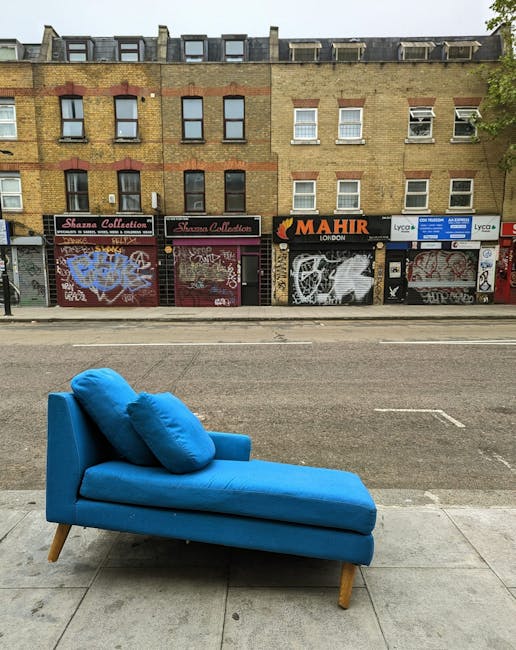
North Hill sofa removal: A Highgate case study
If you live around North Hill in Highgate, you will know the feeling: a sofa that has finally had its day, a hallway that is just a bit too narrow, and the awkward question of what to do next. North Hill sofa removal: A Highgate case study is a useful way to look at the real-life side of furniture clearance in a part of London where access, parking, and disposal rules can make a simple job feel oddly complicated.
This article walks through how a sofa removal project in Highgate is typically handled, why the details matter, what to watch out for, and how to make the whole process smoother. It is not about theory for theory's sake. It is about the practical stuff: moving a bulky item without damaging the stairwell, avoiding a last-minute scramble, and choosing the right disposal route for the situation. Truth be told, that is where most people get stuck.
Along the way, we will also cover when sofa removal makes sense, what a responsible clearance service should do, and how this kind of job connects with broader furniture disposal, house clearance, and waste removal needs. If you're trying to decide whether to book a collection, arrange a full clearance, or simply shift one heavy item out of the way, this guide should give you a clear starting point.
Table of Contents
- Why North Hill sofa removal: A Highgate case study Matters
- How North Hill sofa removal: A Highgate case study Works
- Key Benefits and Practical Advantages
- Who This Is For and When It Makes Sense
- Step-by-Step Guidance
- Expert Tips for Better Results
- Common Mistakes to Avoid
- Tools, Resources and Recommendations
- Law, Compliance, Standards, or Best Practice
- Options, Methods, or Comparison Table
- Case Study or Real-World Example
- Practical Checklist
- Conclusion
- Frequently Asked Questions
Why North Hill sofa removal: A Highgate case study Matters
A sofa removal sounds straightforward until you try to do it on a steep road, through an older property, or from a flat with tight internal stairs. That is exactly why a North Hill case study is useful. Highgate homes often bring a mix of character features and practical constraints: narrow hallways, shared entrances, limited on-street waiting time, and the usual London problem of where the vehicle can actually stop.
This matters because furniture clearance is not just about lifting something and driving away. It affects safety, the condition of the property, the resident's time, and sometimes the wider street if the item is left outside for too long. A poor approach can mean scratches on walls, blocked access for neighbours, or an item that ends up being abandoned because the collection plan was not thought through properly.
There is also a wider relevance here. Sofa removal often sits inside a bigger household clear-out, especially during a move, a refurbishment, or after replacing old furniture. In those cases, people may also need house clearance or a more general furniture clearance service. Looking at the sofa as a single item is useful, but looking at the logistics around it is what prevents the headaches.
And let's be honest, sofas are awkward. They are bulky, they snag on corners, and they often seem heavier than they should be. Why should a simple disposal task become a half-day ordeal? It does not need to, if the process is handled properly from the start.
How North Hill sofa removal: A Highgate case study Works
The process usually begins with identifying the item and the access conditions. A standard sofa might sound like one piece of furniture, but in practice there are several variables: size, weight, whether it splits apart, whether it is leather or fabric, and how easy it is to carry through the property. A clearance team will normally want to know these details early so they can bring the right number of people and the right vehicle.
For a Highgate address, the route out of the property can matter just as much as the sofa itself. If the building has narrow stairs, a tight bend, a shared landing, or a front step that makes carrying awkward, the removal plan needs to reflect that. One extra minute of planning often saves twenty minutes of faffing about. That is not a scientific formula, just experience.
The collection itself usually follows a simple sequence:
- Confirm the item details and access information.
- Arrange a collection window that fits the property and road conditions.
- Prepare the sofa for movement, including cushions or detachable parts if needed.
- Remove the sofa carefully from the property.
- Load it securely for transport.
- Send it for reuse, recycling, or responsible disposal where possible.
That last step is easy to overlook. A responsible service should not just make the sofa disappear. It should handle it in a way that reflects current waste expectations and material recovery principles. If the item can be reused, that is ideal. If not, it should be broken down and disposed of properly.
Some customers come to the process after searching for broader solutions such as waste removal or specific furniture disposal help. That is often sensible, because the right service is not always about the narrowest label. It is about the most efficient fit for the job.
Key Benefits and Practical Advantages
The biggest benefit is simple: you avoid doing the hard part yourself. But there is more to it than muscle power. A well-managed sofa removal saves time, reduces risk, and makes the rest of the day feel less like a logistical puzzle.
- Convenience: No need to wrestle a bulky item down stairs or figure out vehicle access on your own.
- Safety: Heavy furniture can easily cause strain or trip hazards if handled badly.
- Property protection: Careful removal reduces the chance of scuffed walls, chipped paint, or damaged banisters.
- Cleaner disposal route: A proper service should prioritise reuse, recycling, or lawful disposal.
- Time savings: One planned collection is often far quicker than several improvised attempts.
There is also a mental benefit, if that makes sense. Old furniture can sit there for weeks, quietly taking up space and becoming one more thing on the to-do list. Once it is gone, the room feels different. Brighter. Easier to use. A little less cluttered, a lot less nagging.
For landlords, estate managers, or anyone preparing a property between tenancies, sofa removal can also support a quicker turnaround. Pairing it with a broader flat clearance or home clearance can be more efficient than tackling items one by one.
Expert summary: In Highgate, the best sofa removals are usually the ones that look uneventful from the street. Good planning, clear access checks, and the right disposal route make the job feel almost boring. That is a compliment.
Who This Is For and When It Makes Sense
This kind of sofa removal is relevant to quite a few people, and not just homeowners. If you are in Highgate and dealing with a bulky item that needs to go, the service may make sense if any of the following sound familiar:
- You are replacing a sofa and need the old one removed quickly.
- You are moving out and want the room left clear for sale, letting, or end-of-tenancy checks.
- You have a damaged or stained sofa that cannot realistically be reused in the home.
- You live in a flat or terraced property with awkward access.
- You are clearing a property after refurbishment, family changes, or a long period of storage.
- You need the job handled without disrupting neighbours or shared entrances.
It also makes sense when the sofa is only part of the problem. Maybe there is an old chair, a coffee table, a broken bed frame, and a few bags of mixed waste waiting nearby. In that case, a sofa-only plan may be less efficient than a furniture-focused or even full-property clearance. Sometimes the cheapest option on paper is not the simplest one in real life. Annoying, but true.
If you are dealing with a larger clear-out, it may be worth looking at related services such as office clearance for commercial spaces or builders waste clearance if the sofa is being removed during a renovation. Not every job fits neatly into one box.
Step-by-Step Guidance
If you want the removal to go smoothly, a little preparation helps more than people expect. Here is the practical version, without the fluff.
1. Measure the sofa and the route out
Measure the sofa's height, width, and depth. Then check the doorway, stairwell, and any tight turns on the way out. A sofa may fit in the room but still fail at the final corner. That is a classic London moment.
2. Take photos if access is tricky
A few clear photos of the sofa and the path out can help the collection team judge the job properly. If the property has a narrow hallway or shared stairs, show that too. It is a small effort with a useful payoff.
3. Clear the route before the crew arrives
Move shoes, lamps, side tables, and anything fragile out of the way. You do not want a rushed lift to become a minor domestic disaster. Even a half-empty hallway makes a difference.
4. Check whether the sofa can be dismantled
Some sofas separate into sections, which can make removal much easier. Do not force anything, though. If bolts, clips, or fixings are involved, keep them together so nothing gets lost mid-job.
5. Confirm parking and access details
In Highgate, the vehicle position can be a real factor. If parking is limited or the road is busy, make sure collection arrangements account for it. A short delay at the kerb can turn into a longer one inside the property if the plan is vague.
6. Decide what should happen to the sofa
If the item is in good condition, it may be suitable for reuse or onward recovery. If it is damaged, heavily worn, or unsafe, disposal becomes more likely. Either way, the decision should be made before the collection day, not during it.
7. Keep communication simple and direct
A clear message about access, item condition, and timing tends to work best. No need for a novel. Just the facts.
Expert Tips for Better Results
After enough furniture removals, a few patterns become obvious. The jobs that run smoothly usually share the same habits.
- Book with the access challenge in mind. A terraced house and a top-floor flat are not the same job, even if the sofa is identical.
- Keep the clearance area well lit. Especially in winter, when it is dark by late afternoon and the stairs feel narrower for some reason.
- Use protective covers if needed. This can help when moving through clean or freshly decorated spaces.
- Separate reusable items early. If there are matching chairs or other furniture pieces, do not wait until the last second to decide what goes.
- Ask about the disposal route. A responsible company should be able to explain whether items are being reused, recycled, or treated as waste.
Another practical tip: if you are renovating, try to align sofa removal with other jobs. One visit for furniture, another for rubble, another for old appliances? That gets tiring fast. Combining tasks where appropriate can reduce disruption, though only if the team has the right capacity and the items are suitable for the same collection. No heroics needed.
For properties with more complex clear-outs, it can be smart to review wider support pages such as loft clearance or garage clearance if the sofa is just one piece in a much larger puzzle.
Common Mistakes to Avoid
Most sofa removal problems are avoidable. The issue is usually not bad luck; it is poor preparation.
- Leaving access checks until collection day. That is how delays happen.
- Assuming the sofa will fit through the same route it came in by. Sometimes the original route no longer works because furniture or fixtures have changed.
- Forgetting about parking or loading space. A good plan includes the street as well as the interior.
- Mixing the sofa with loose waste. Separate bulky furniture from bags, cardboard, or renovation debris unless the service has confirmed it can take both.
- Choosing speed over care. Fast is useful. Careful is better.
- Not asking what happens after collection. Responsible disposal matters, even for one sofa.
One quiet mistake I see people make is underestimating how awkward an old sofa can be once it starts moving. It is not just heavy; it twists, catches, and suddenly becomes wider than the room. That is where damage happens if everyone rushes.
If the sofa is in a property with stricter access conditions or shared occupancy, you may also want to think about broader clearance planning. In some cases, a full house clearance approach is safer and simpler than piecemeal removal.
Tools, Resources and Recommendations
You do not need specialist equipment for every removal, but a few practical tools and habits help a lot.
- Measuring tape: Useful for checking the sofa and the route out.
- Protective gloves: Good for grip and for handling older upholstery or hidden staples.
- Blankets or covers: Helpful if the route passes through painted walls, polished floors, or narrow corners.
- Phone camera: A simple way to document access points or awkward features before collection.
- Basic screwdriver or Allen key set: Sometimes needed if the sofa can be dismantled safely.
On the service side, useful resources include pricing guidance, service descriptions, and company policies. A customer looking into a proper clearance provider should ideally check pricing and quotes, plus practical policies such as insurance and safety and recycling and sustainability. That gives you a better picture of how the company works, not just what it charges.
If you are comparing options for a larger job, the broader blog can also be useful for local context and planning ideas. It is the sort of thing people often ignore until they are stuck with a sofa in the hall and no clear plan.
Law, Compliance, Standards, or Best Practice
For sofa removal, the main issue is not legal complexity; it is making sure waste is handled responsibly and safely. In the UK, good practice means using a service that can deal with items lawfully, keep records where needed, and avoid fly-tipping or unsafe handling. If a company cannot clearly explain what happens to the furniture after collection, that is a warning sign.
Health and safety matters too. Heavy lifting, awkward staircases, and tight spaces can create real risks if the work is rushed. That is why policies and procedures are worth checking, especially if you have vulnerable flooring, shared access, or valuable items nearby. A service with clear health and safety policy and complaints procedure usually signals a more structured approach.
There is also a practical local angle. Highgate sits within a part of London where waste rules, parking pressures, and estate management expectations can all affect how a removal is carried out. The exact arrangements depend on the property and the collection method, so it is wise to treat any compliance discussion carefully and avoid assumptions. A clear, lawful, and tidy process is the standard to aim for.
Finally, payment and booking should be straightforward. If you are comparing providers, a transparent booking process and sensible payment handling can reduce stress. Not glamorous, but very useful. For that side of things, it helps to review payment and security before you commit.
Options, Methods, or Comparison Table
There is more than one way to deal with a sofa in Highgate. The right method depends on condition, access, timing, and how much else needs moving. Here is a simple comparison to make the choice less messy.
| Method | Best for | Pros | Watch-outs |
|---|---|---|---|
| Single-item sofa removal | One sofa, straightforward disposal | Quick, focused, usually efficient | Less suitable if you have several other items to remove |
| Furniture clearance | Multiple items, mixed furniture | Better value for larger loads, less repeat effort | May be more than you need for a single item |
| Flat or house clearance | Full rooms, moving out, estate work | Most comprehensive option | Can be unnecessary if only one piece needs removal |
| General waste removal | Mixed non-reusable waste alongside furniture | Flexible when the load is not neatly categorised | Check what materials are accepted |
There is no universal winner here. A sofa that is the only item in the room calls for a different approach from a sofa sitting among a pile of old chairs, boxes, and renovation offcuts. If you match the method to the actual job, the whole process gets easier. Funny how that works.
Case Study or Real-World Example
Here is a realistic Highgate-style scenario. A resident on North Hill has an old two-seater sofa that has outlived its usefulness after a renovation. It is too large to leave in the normal waste stream, the building has a narrow entrance, and the stairs turn sharply halfway up. The property is occupied, so the resident also wants the removal done without disturbing neighbours or leaving the doorway blocked.
The first useful step is a proper access check. A quick measurement shows the sofa can be carried through the doorway only if it is angled carefully. It will not pass the stair bend in one piece, so the team plans to dismantle it where possible. Cushions are removed first, then the frame is protected to avoid scuffs on the hallway wall. A short collection window is arranged, which helps keep street disruption down.
On the day itself, the job goes smoothly because the route has already been cleared and the parking detail was sorted in advance. The sofa is loaded without damage to the property, and the resident avoids the stress of trying to do it alone. That is the real value here. Not drama, not heroics, just a tidy, efficient removal that does not turn into a local saga.
In a slightly larger version of this job, the customer might also decide to remove other items at the same time and move into a broader clearance service. That can include furniture, mixed household waste, or even items from a loft or garage. When the plan is joined up, the result is usually better. Less repetition, fewer headaches, more floor space by tea time.
Practical Checklist
Use this before booking or on the day of collection. It keeps the job simple.
- Measure the sofa and the route out of the property.
- Check stairs, lifts, turns, and doorway widths.
- Clear clutter from hallways and access points.
- Confirm parking or loading arrangements.
- Take photos if access is awkward.
- Decide whether the sofa is reusable or only suitable for disposal.
- Ask what happens to the item after collection.
- Review pricing, safety, and payment information first.
- Keep pets, children, and breakable items away from the route.
- Have someone available if the crew needs access help or a quick decision.
Quick takeaway: the smoother the access plan, the easier the removal. Most problems are solved before the sofa even starts moving.
Get a free quote today and see how much you can save.
Conclusion
North Hill sofa removal in Highgate is a small job on paper, but in practice it can involve access challenges, disposal decisions, and a fair bit of coordination. The good news is that once you understand the moving parts, it becomes much easier to handle. Measure first, plan access carefully, and choose the removal method that fits the real situation rather than the ideal one.
If you are replacing a sofa, clearing a flat, or just trying to reclaim space, a thoughtful approach will save time and reduce stress. And that matters more than people sometimes realise. A clear room has a way of clearing the mind too.
When the job is done properly, it just feels calmer. No fuss, no mess, no lingering bulky sofa blocking the way. Nice, really.
Frequently Asked Questions
What does North Hill sofa removal in Highgate usually involve?
It usually involves assessing the sofa, checking access, arranging collection, safely removing the item from the property, and sending it for reuse, recycling, or disposal depending on its condition.
Can a sofa be removed from a flat with narrow stairs?
Yes, often it can. The key is measuring the access route first and deciding whether the sofa needs to be moved whole or partly dismantled. Tight turns can be the main issue, not the sofa itself.
How do I know if my sofa should be reused or disposed of?
If the sofa is structurally sound, clean enough, and safe to use, reuse may be possible. If it is badly worn, damaged, damp, or unsafe, disposal is usually the better route. A clear assessment helps.
Is sofa removal different from furniture clearance?
Yes. Sofa removal usually means one specific item, while furniture clearance covers several pieces at once. If you have more than one bulky item, furniture clearance is often more efficient.
Do I need to prepare the sofa before collection?
Usually a little preparation helps. Remove loose items, clear the route, and check whether cushions or detachable parts should be separated. You do not need to overdo it, just make access easier.
What if the sofa will not fit through the door?
That is common enough. The team may be able to angle it, remove legs, or dismantle parts of the frame if appropriate. If that still does not work, another removal route may be needed.
How long does a typical sofa removal take?
It depends on access, parking, and the type of sofa. A straightforward job can be quite quick, while awkward staircases or tight hallways naturally take longer. Access usually matters more than people expect.
Can I add other items to the same collection?
Often yes, if the service agrees in advance. Adding chairs, tables, or other furniture can be more efficient than booking several separate removals. Just confirm the item list beforehand.
What should I ask before booking a removal service?
Ask about access requirements, disposal methods, pricing, safety procedures, and whether the item will be reused or recycled where possible. Clear answers are a good sign.
Is it better to book a single-item removal or a full clearance?
It depends on the scale of the job. If you only have one sofa, a single-item collection may be enough. If there are several items or the property needs a broader clear-out, a fuller clearance is often better value and less hassle.
What happens if parking is difficult on North Hill?
That needs to be factored into the booking. Street access can affect timing, loading, and how the removal is planned. It is better to mention parking constraints early than to deal with them on the day.
How can I reduce the risk of damage during sofa removal?
Clear the route, protect corners or flooring if needed, and use a team that takes access seriously. Most damage happens when people rush or improvise, so a careful plan is the best protection.